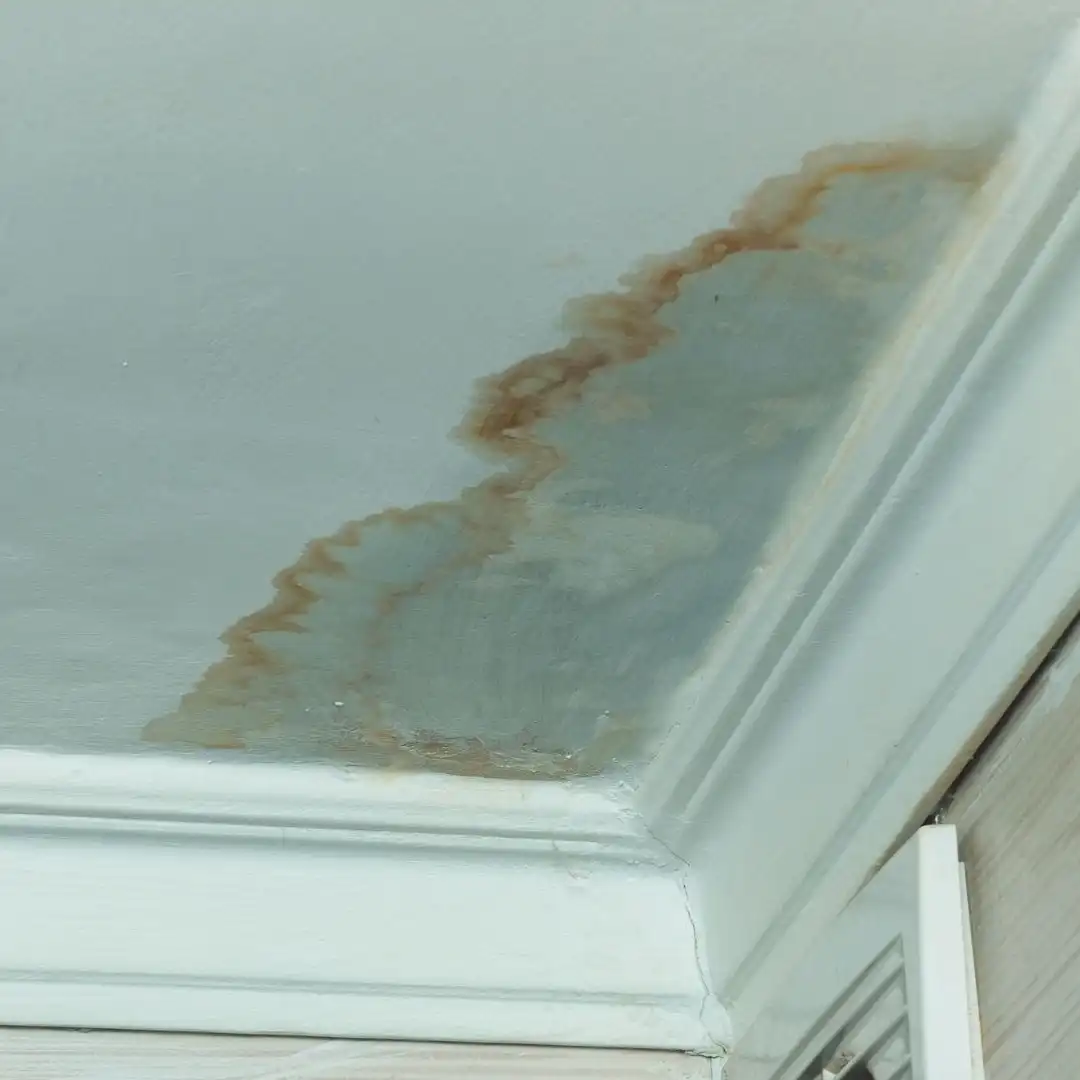
The Cost-Per-Hour Argument for Early Detection
Insurance data and our own job records line up on one point: a leak caught within 72 hours averages $1,200 to $3,500 in restoration costs, while the same leak running 7 to 14 days averages $6,000 to $14,000. The jump is not linear. Drywall absorbs water at roughly 0.5 to 1 inch of wicking height per 24 hours, and once insulation saturates, you have lost about 70 percent of its R-value until full replacement. Wall framing tolerates short term moisture, but sustained readings above 19 percent moisture content trigger fungal growth in softwoods within 4 to 10 days. Detection that costs $250 to $600 on the front end routinely saves $4,000 to $10,000 in avoided demolition and rebuild.
The math gets sharper when you factor in secondary damage. A leak that reaches hardwood flooring adds $8 to $14 per square foot in refinishing or replacement, and cabinetry exposed to wicking moisture for more than 5 days swells at the base and loses about 40 to 60 percent of its resale value even after drying. Danville Water Restoration tracks roughly 30 to 35 percent of late stage wall leaks producing mold remediation costs of $1,500 to $6,000 on top of the structural repair. Acting in the first 72 hours is not just cheaper, it is the difference between a plumbing repair and a full insurance claim with a deductible, depreciation schedule, and contents inventory.
Method Accuracy and What You Pay For
Thermal imaging cameras detect temperature differentials as small as 0.1 degrees Celsius. On a typical Danville wall with active leakage, the wet area reads 2 to 5 degrees cooler than surrounding dry drywall due to evaporative cooling. Accuracy runs about 85 to 92 percent on active leaks within the past 48 hours, dropping to roughly 60 percent on intermittent leaks that have dried between cycles. A thermal scan of a single bathroom or kitchen wall takes within 2 hours and is included in our free assessment.
Moisture meters fall into two categories. Pin meters read 6 to 19 percent moisture content with about 95 percent accuracy but require small probe holes. Non invasive capacitance meters scan to a depth of roughly 0.75 to 1.25 inches with 80 to 88 percent accuracy and leave no marks. We typically run both, using the capacitance meter to map the wet zone and the pin meter to verify at the edges. For deeper structural moisture, our moisture mapping with thermal imaging documentation gives insurance adjusters a defensible record.
Acoustic leak detection uses ground microphones tuned to the 400 to 2,000 Hz range where pressurized water escaping a pipe generates characteristic hiss and tap signatures. On copper supply lines under 60 to 80 PSI, accuracy reaches 90 to 95 percent and pinpoints the leak within 6 to 12 inches. PEX and PVC dampen the signal, dropping accuracy to 70 to 80 percent. Acoustic work adds $150 to $400 to a detection job and takes 30 to 90 minutes depending on wall length and ambient noise.
When Non-Invasive Has Real Limits
About 1 in 5 wall leaks resists every non invasive method we own. Common reasons include double wall construction with air gaps that block thermal transfer, leaks above 8 feet where capacitance meters cannot reach, and slow drip leaks that dry between inspection windows. In those 20 percent of cases, a 4 by 4 inch inspection cut costs $75 to $150 to patch versus $800 to $2,500 in unnecessary exploratory demolition. Knowing the difference between signs of hidden water damage and confirmed active leakage is what keeps our recommendations honest.
Older Danville homes built before 1970 add another wrinkle. Plaster over lath walls reduce capacitance meter accuracy by about 15 to 25 percent because the lath spacing creates false readings, and galvanized supply lines with mineral scale produce acoustic signatures that mimic active leaks even when dry. In those structures we lean harder on tracer gas and on pressure drop testing at the manifold, which can confirm or rule out a supply leak in 20 to 45 minutes for around $125 to $275. That layered approach is how Danville Water Restoration keeps the overall non invasive success rate near 80 percent across building ages from 1920 to current construction.
Timeline From Suspicion to Repair Authorization
A typical Danville wall leak investigation runs on a predictable clock. Initial phone triage takes 5 to 10 minutes. Crews arrive within 2 hours in most cases. on site assessment and thermal scan: within 2 hours. Moisture mapping and acoustic work: within 2 hours. If tracer gas is needed, add another 1 to 3 hours. Written findings with photographs and meter readings reach you the same day in 70 to 80 percent of jobs. From that report, your plumber typically schedules the actual pipe repair within 24 to 72 hours, and our drying and restoration work begins immediately after the repair is verified. The full sequence, from your first call to dried structure, averages 4 to 8 days for contained wall cavity leaks. Larger events involving water damage behind walls with multi room migration can extend to 10 to 14 days.
Tracer Gas: The Last Step Before Demolition
When acoustic and thermal fail, tracer gas detection works on roughly 92 to 97 percent of remaining cases. We isolate the suspect line, pressurize it with a 95 percent nitrogen and 5 percent hydrogen mix at 5 to 15 PSI, and sweep the wall surface with a sensor calibrated to detect 5 parts per million. The gas migrates through drywall pores from the leak point. Cost ranges from $400 to $900 per line and the process takes 1 to 3 hours. For slab and partition wall leaks, tracer gas often eliminates the need for exploratory demolition entirely, which can save $1,500 to $4,000 in restoration.
The hydrogen blend is non flammable at that 5 percent concentration and dissipates completely within 20 to 40 minutes after depressurization, so there is no residue or ventilation requirement after the work. We pair tracer results with thermal and moisture data to triangulate the exact stud bay, narrowing the access cut to a 6 by 6 inch opening in about 80 percent of cases. That precision matters most on tile backer walls and built in cabinetry, where a wrong cut can mean $600 to $2,200 in finish carpentry on top of the plumbing repair itself.